As Close to Reality as
Authentic real-time
What
Your Gain
Research application
Clinical application
This software is already included in our CAREN and GRAIL systems. It can be purchased for the M-Gait to access its full power.
The Human Body Model (HBM) is a reliable computer model of the complete human body, representing a total of 46 kinematic degrees of freedom. It facilitates real-time biomechanical analysis of joint kinematics and kinetics, as well as estimation and visualization of muscle function, providing thorough motion insights and information
Use real-time insights for on-the-fly feedback on specific motion parameters, and explore new research on whether visual feedback changes the behavior of musculoskeletal parameters with HCM’s robust software. HBM’s robust software was created by the leading expert in this field, Professor Ton van den Bogert (Former President of the ISB), based on the idea of Motek founder, Oshri Even-Zohar.
Why
HBM?
Complete Real-Time Musculoskeletal Model with Avatar
HBM calculates musculoskeletal measurements fast enough to provide real-time feedback to patients or research participants. Visualization of results in a VR environment is made easy with the creation of a complete avatar. With HBM’s near-instant output, you can have gait analysis available within a minute of the patient stepping off the treadmill.
No Anthropometric Measurements Needed
With HBM, it is possible to calibrate without any manual measurements of knee and ankle width. By simply placing markers on the medial knees and ankles, setup is easy and efficient. Unlike other models that may require manual measurements of parameters such as leg length.
Standardized Marker Set
HBM follows the marker names and placement set by research consensus from the European MD-PAEDIGREE project in collaboration with several leading gait labs. This standardization makes gait analysis data more comparable between labs.

Validated Against Other Models
HBM has been favorably compared to OpenSim, which is equally valid and widely used for clinical settings. While both models are clinically rigorous, HBM’s intuitive design makes it the preferred choice for teams prioritizing ease of use and faster results. (Falisse et al.: OpenSim Versus Human Body Model: A Comparison Study for the Lower Limbs During Gait)
Additional Features

Proof & Inspiration
Do not just take our word for it.
Find proof and get inspired through research papers, case studies, white papers, clinical reports, patient stories and more surrounding HBM in our extensive library.
Powering
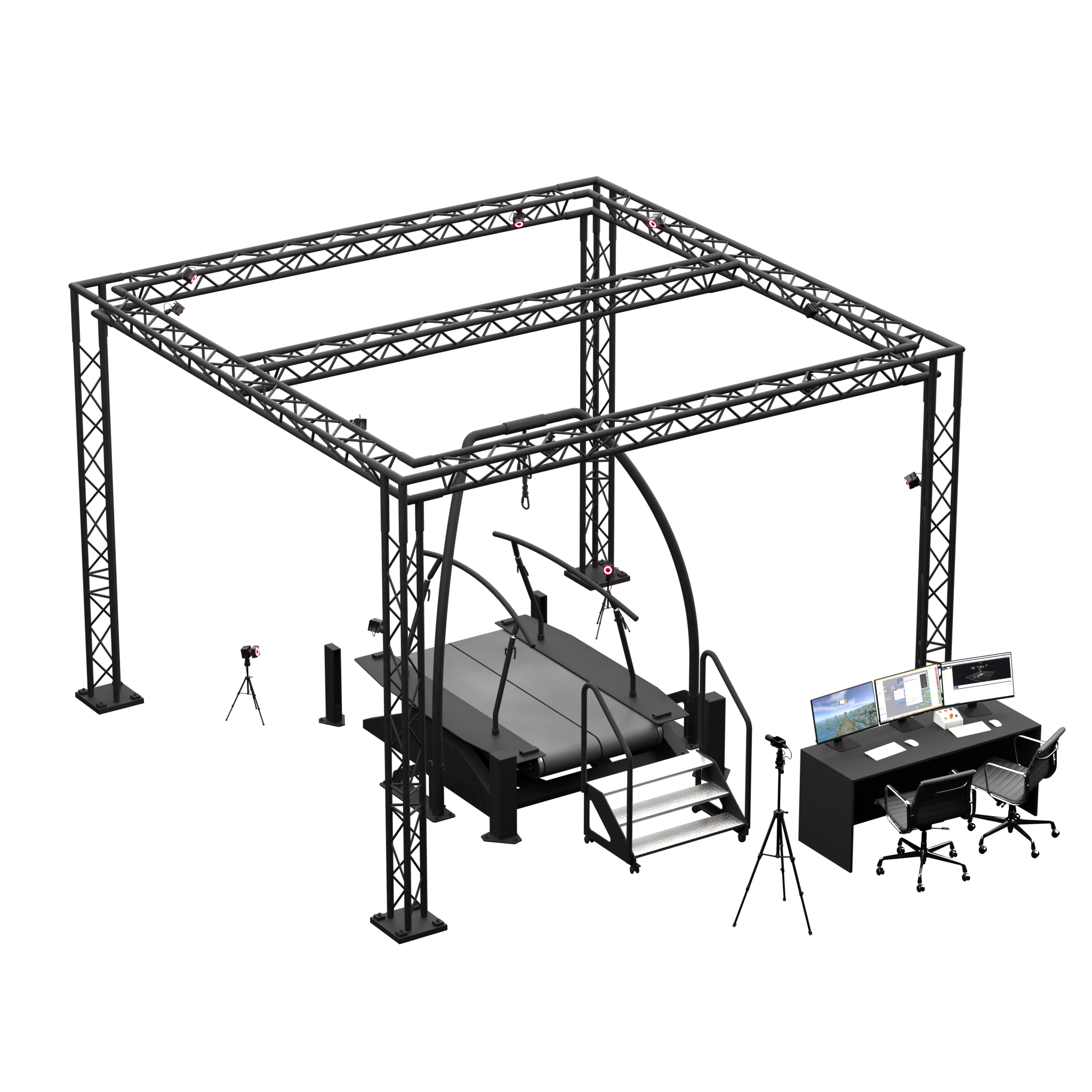
M-Gait
The M-Gait enables multiple system enhancements to improve the functionality of your research or clinical setup. Upgrade your dual-belt instrumented treadmill with pitch and swap, motion capture, virtual reality, bodyweight support, and more.
HBM is an optional component of the M-Gait.
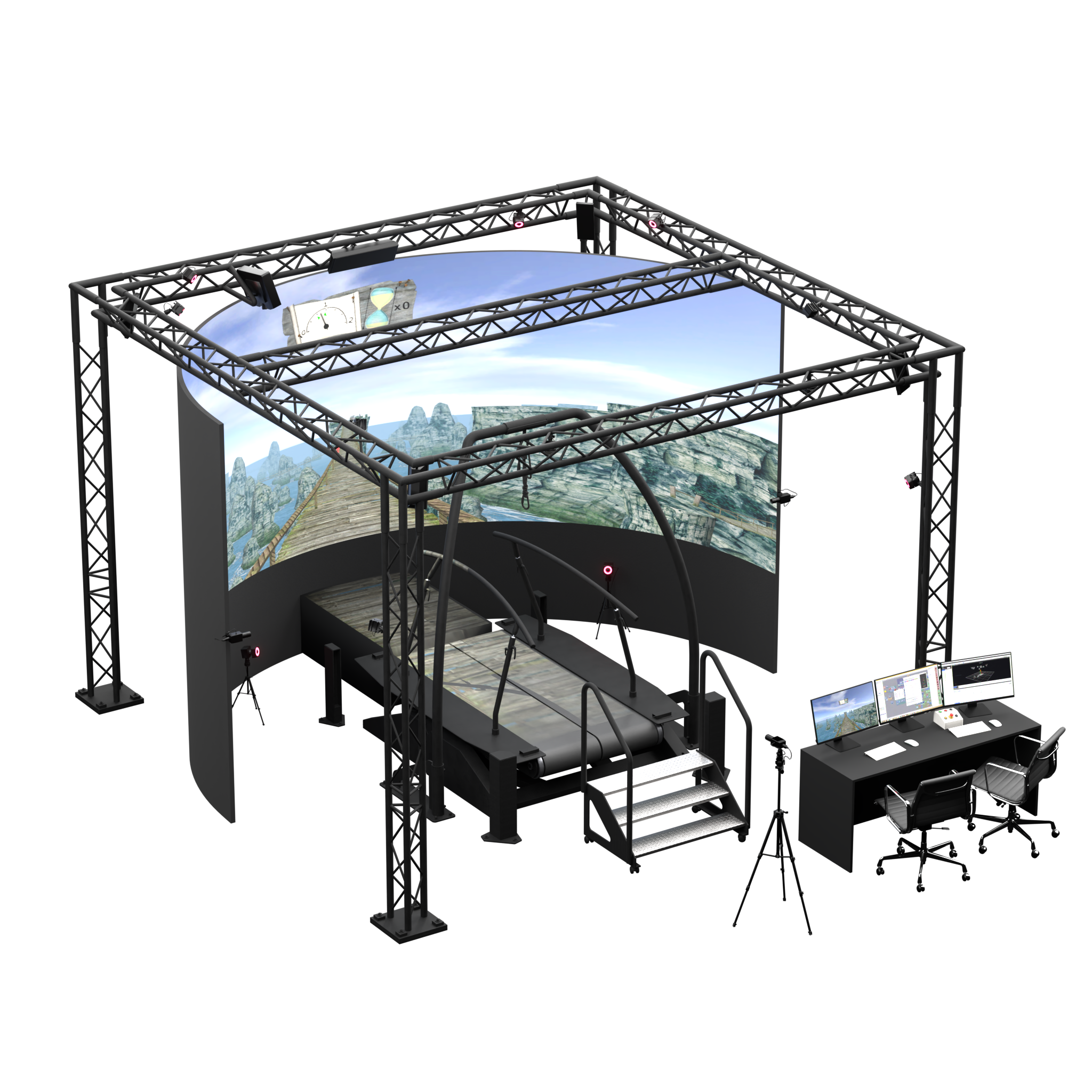
GRAIL
The total package solution for gait analysis and training, GRAIL uses all available gait parameters to integrate real-time data collection and visual feedback applications. Enhance your research potential and therapy programs by varying challenging conditions.
HBM is a standard component of the GRAIL.

CAREN
The CAREN is the world’s most advanced biomechanical lab. Targeting all aspects of balance and locomotion, CAREN enables researchers and clinicians to assess and analyze participant behavior through an integrated dual-belt instrumented treadmill on a 6-degree-of-freedeom motion base in an immersive virtual reality environment.
HBM is a standard component of the CAREN.
Need more
information?
Do you want to know more about Motek solutions for your area of work?